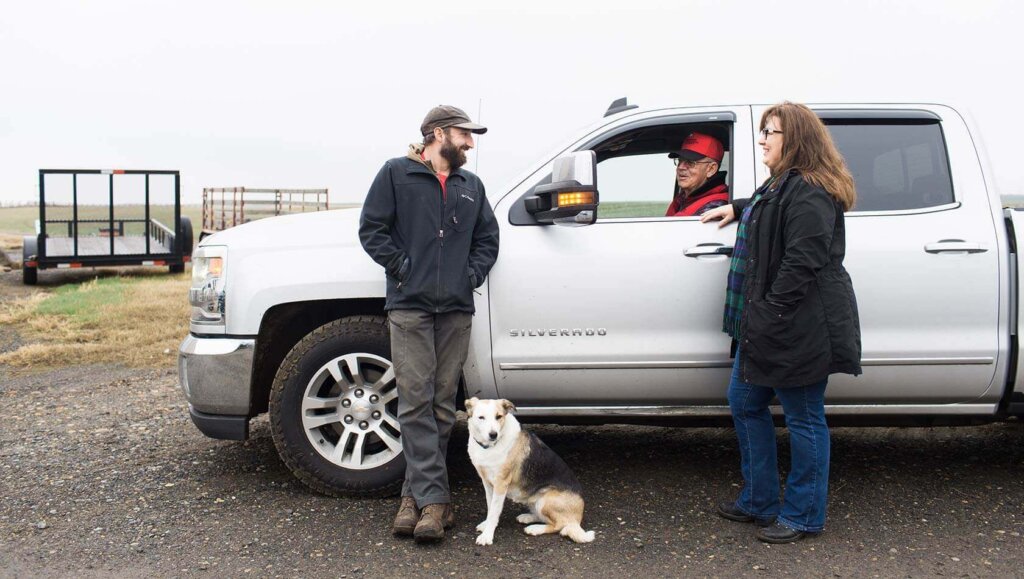
Building a More Resilient Plateau Valley
Collbran Conservancy District (CCD) provides water for farms and ranches in the Plateau Valley and, like hundreds of irrigation districts around the west, mostly by way of infrastructure engineered and built in the early 20th Century.
The hundred-year-old systems were smartly designed linchpins that unlocked much of the arid west to highly productive agriculture that continues today.
However, the Parker Basin Slide is a constant threat to the critical South Side Canal with an ever-larger maw creeping upwards to within a hundred feet of the canal and siphon.
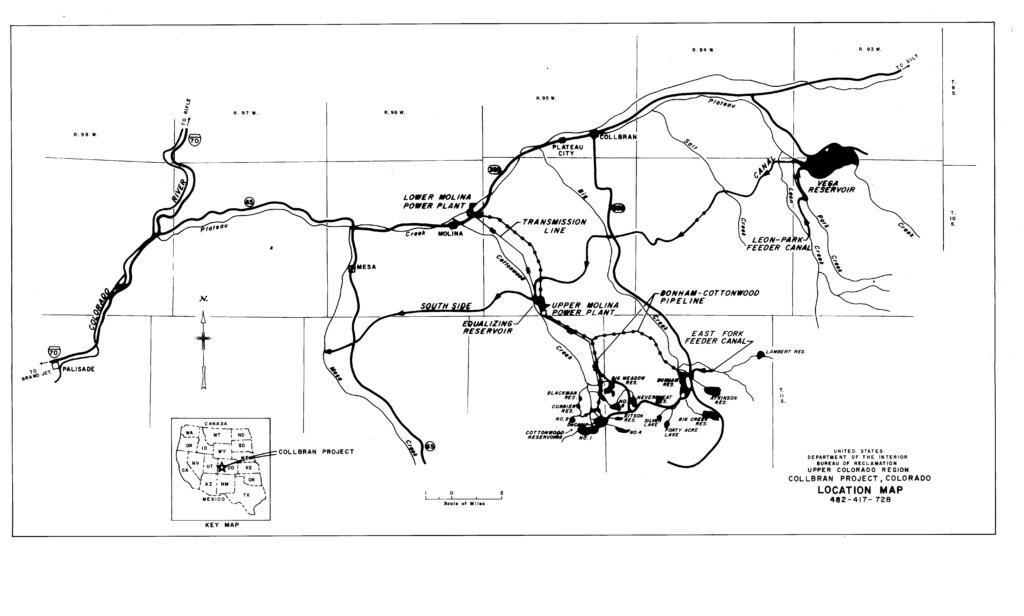
Collbran’s system is more complex than most. Feeder canals spidering off the 10,000-foot-plus Grand Mesa—the world’s largest flat-top mountain and a massive water catchment—direct water down the valley, much of it into Vega Reservoir for storage. Some canals funnel into deep siphons that carry the water through mile-long pipes buried beneath steep, high-elevation valleys.
In May 2014, heavy spring rains and a small earthquake triggered Colorado’s largest landslide a catastrophic three-mile-long slide that killed then CCD Manager Wes Hawkins and father and son Clancy and Danny Nichols. The men had driven up the valley to assess damages to an irrigation diversion structure resulting from preliminary slide activity. The tragedy shook the tight-knit agriculture community of Plateau Valley, but the water had to keep flowing so CCD resumed its work.
“Every year, it keeps working back a little bit, and eventually it’s going to get within where we may have to shut the canal down, or it may wipe out the canal. Over half of our users are downstream below this point.”
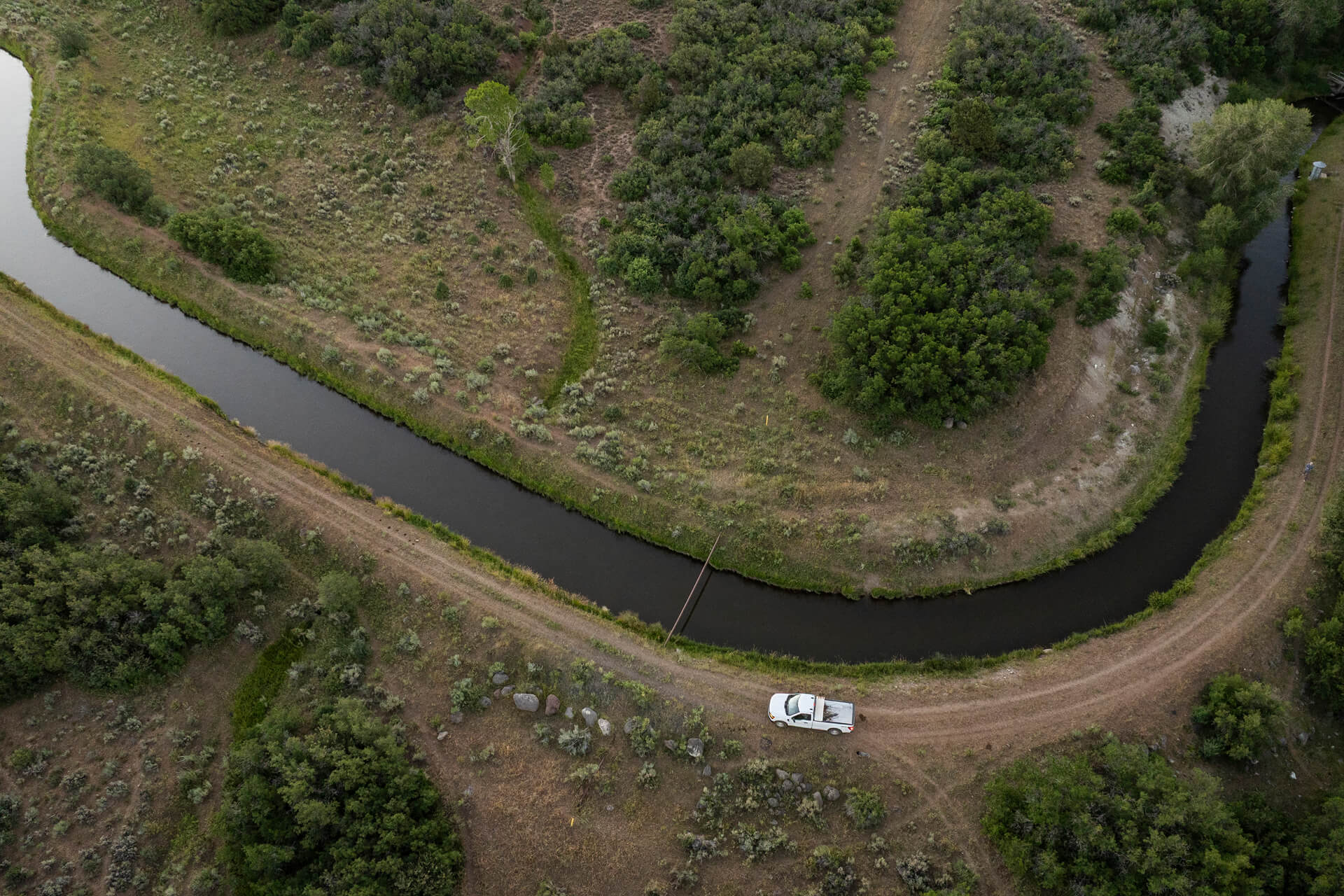
Nearly ever summer morning, Bruce Michaelsen drives into the pre-dawn dark, his two cattle dogs riding in the truck bed or running well ahead of that truck on the dirt road alongside.
Michaelsen’s dad was what irrigation people call a “ditch rider,” so he’s traveled these narrow, bumpy tracks thousands of times, both as a kid and now as the Collbran Conservancy District manager.
At each of the frequent stops, their paws scuttle across the cab as they leap from the tailgate to join Michaelsen as he measures water flow and checks for leaks in the aging canal system.
“Everybody sees us deliver the water,” says Michaelsen, “but there’s so much more that goes into it. It’s the driving along the canal, checking for the cracks. It’s like you go to the restaurant and you get the food on your plate, but you’re not seeing all the work. So when we make water deliveries, that is just the small part of it. There’s a lot of man hours that goes into getting the orders done, making sure the canal is safe and operable, making sure we’re catching all these failures before they get damaged or we completely lose the canal.”
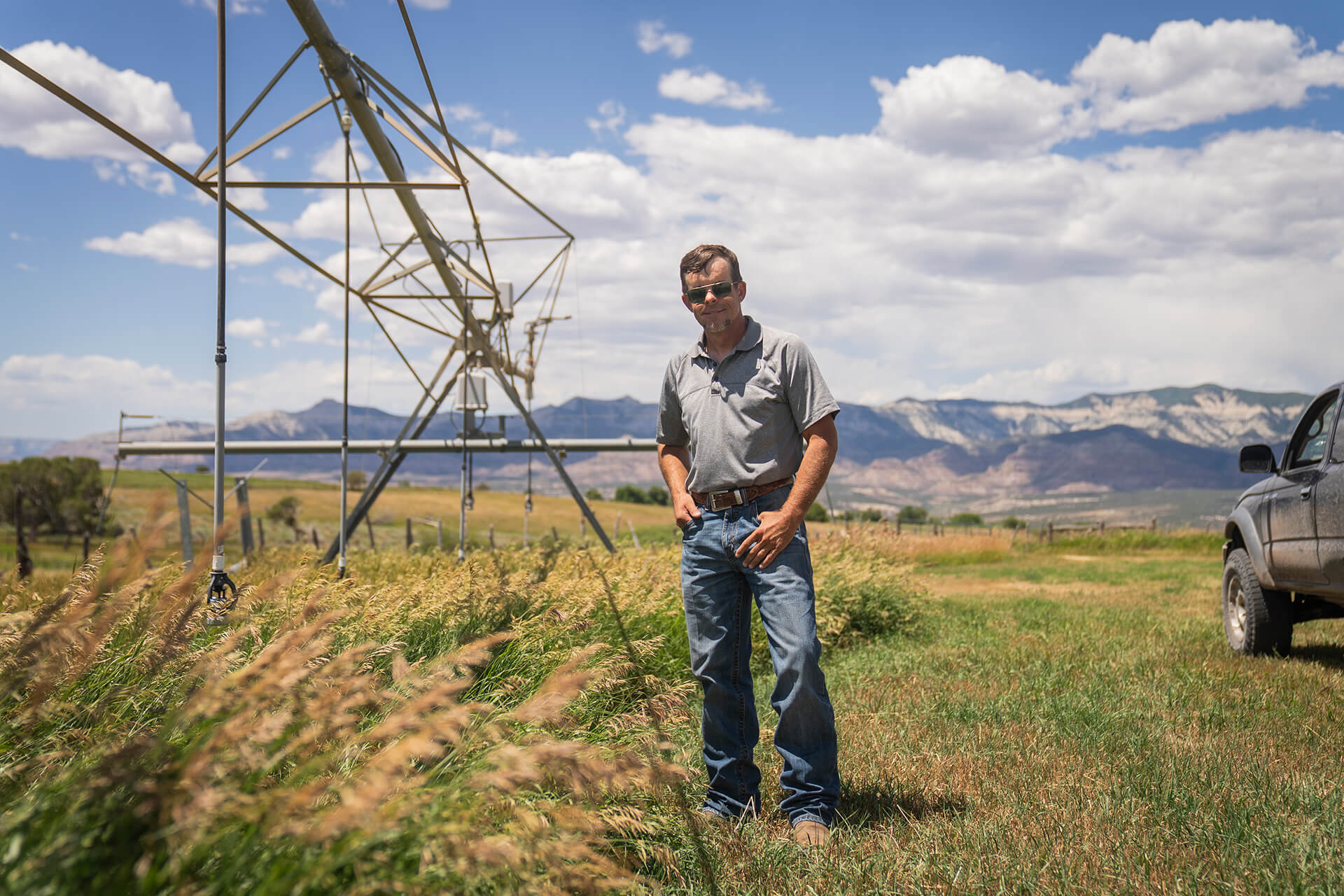
Forrest “Forrie” Towns has been raising hay and cattle in the District for over 30 years. He operates downslope of Michaelsen’s morning ditch rides.
Towns and irrigators like him put in water orders measured in acre feet. The water arrives 10-24 hours later via smaller canals that braid off the main canal or natural creeks that are also part of the water conveyance system.
Towns drops V-shaped weirs into narrow, weed-choked channels. The weirs create a small dam in the channel and allow for Towns to accurately measure his water order.
“As soon as the natural flow goes out, we put in a card to order our reservoir water,” Towns explains. “It’s turned into the South Side Canal, [then] comes around to the Big Creek drainage drop. At that point, it is turned into this place via the Silver Gage ditch, it bounces through a couple of proportional divider boxes till it comes to a corner over here and it goes into our inlet structure. From there, on this 80 acres, we run a center pivot. We run big guns. There’s a side roll sprinkler, and there’s even some gated pipes.”
Other, smaller reservoirs capture water that is discharged for power production managed by the Bureau of Reclamation. The tailrace water from the Bureau’s hydropower operation goes to the municipal supply for residents in the Grand Valley, managed by the Ute Water Conservancy District (Ute Water). It’s a marvel of engineering, but one that is becoming more fragile with time and the sometimes tragic geologic realities of the western slope of the Rockies.
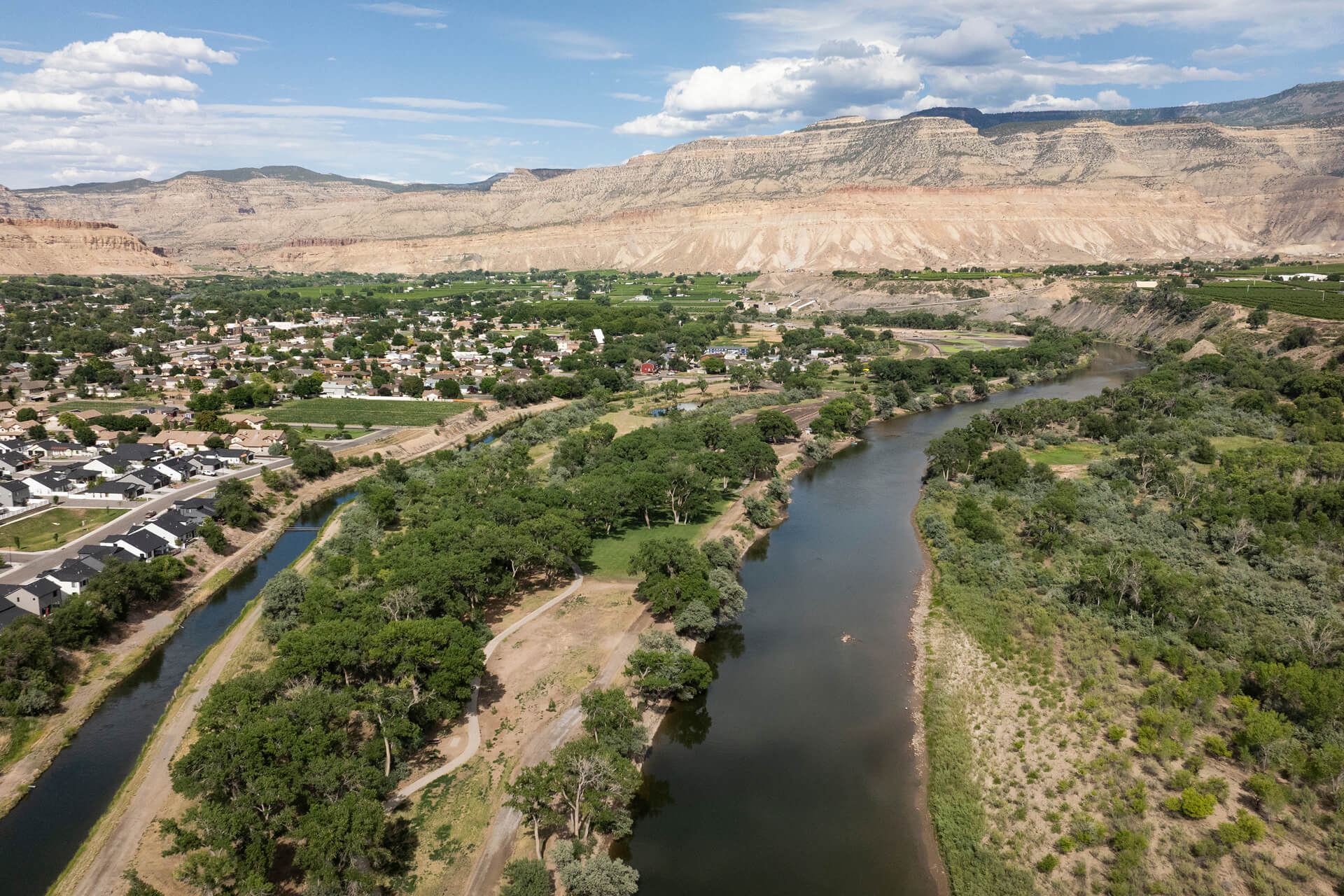
The water works its way downhill to flow into Plateau Creek and ultimately reaches the Colorado River above Palisade, CO, a small town at the base of the western slope where the Grand Valley begins.
The water flowing into the Grand Valley serves thousands of patrons in irrigation districts outside of CCD.
All of this movement and water delivery relies on the aging canal infrastructure upstream, all of which is at risk on account of the Parker Basin slide.
“You’d have implications everywhere,” says the Bureau of Reclamation’s Matt Altman, “from recreation to potable water to just having to shuffle around the way that we would deliver water to water users and irrigators, and we would become very limited as to what we would do. And the big thing, for Reclamation, is that we would lose that power revenue.”
Dave Payne of Ute Water Conservancy District, which relies on water that has passed through the Bureau of Reclamation’s power operations as a clean, reliable source of municipal drinking water, remarked “We want to work together with Collbran Conservation District proactively, not reactively, prior to a catastrophic failure of the South Side in this location, which would be a multi-year shutdown event for us and for them.”
The District is working to address the threatened South Side Canal in the Parker Basin proactively, in order to avoid the impacts of a costly and potentially devastating future slide. Piping the South Side Canal around the anticipated slide zone would enable the District to safely deliver water in the event of another slide, ensuring uninterrupted water access for irrigation, hydropower, and domestic uses.
Learn more about Collbran Conservancy District
Watch the Full Video
Restoring the Hood River Watershed
Ditching the Ditch-Walking Way of Life

Planning for the Next 100 Years of Water Delivery